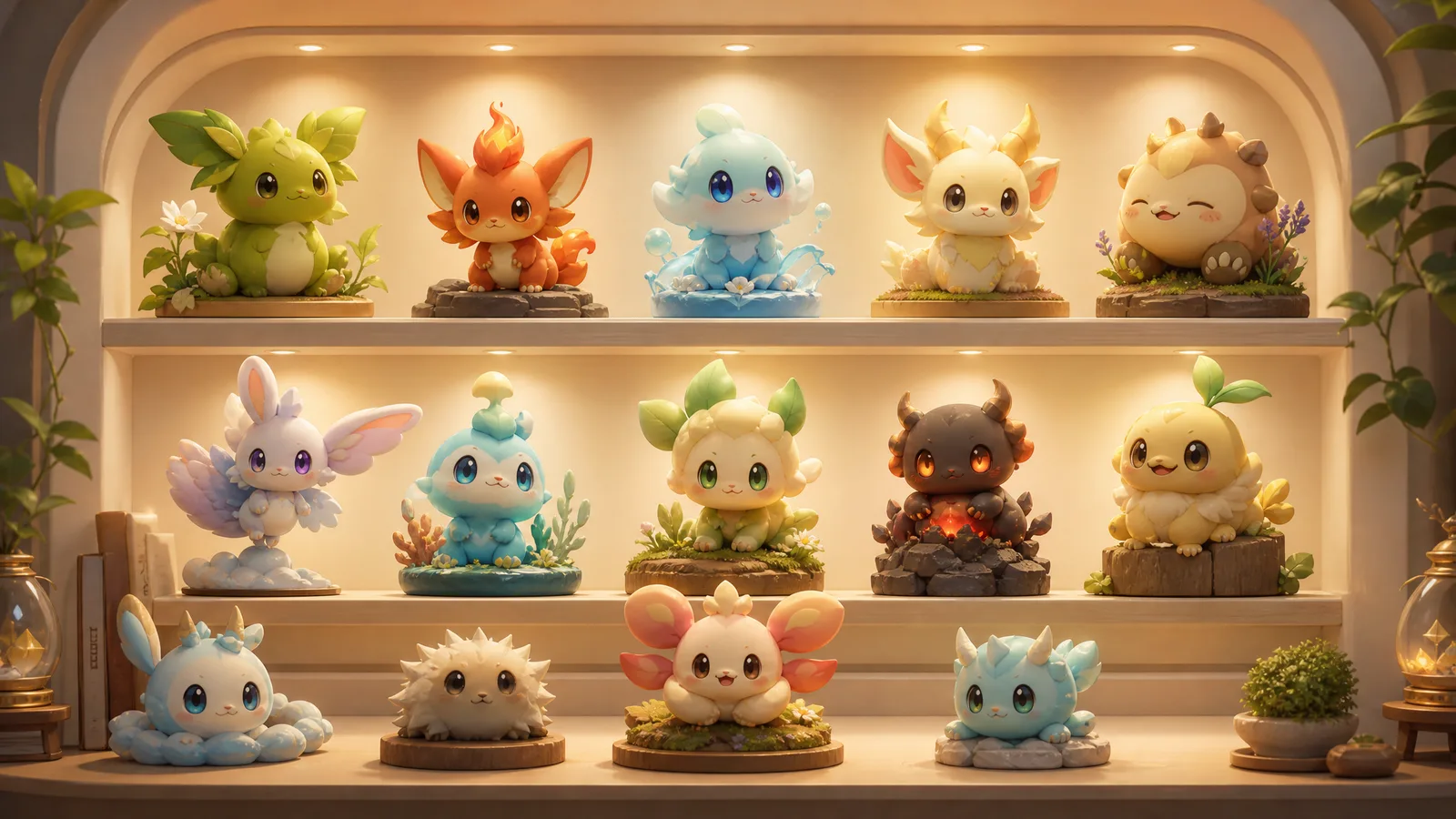
Quick answer: Complete a sprite collection in three passes: easy and mid-rate sprites first, event variants second, and the ultra-rare chase last. Track ownership in a locker, review the gap once a week, and set a stopping rule for the final few entries.
Why most completion plans fail
Most plans fail at the start, not the end. A player lists every sprite, sees one ultra-rare entry, and turns the whole project into a chase for that entry. The easy 80% never gets finished because the hard 5% owns the attention.
A better plan runs in passes. Each pass has a clear target and a clear exit. You finish something before you start the next thing.
Pass one: the reachable core
Start with the sprites that have a reported rate you can reach in a normal week. A 3.5% sprite is a weekend target; a 1.5% sprite is a two-session target; an unconfirmed entry may be easier than it looks. Mark ownership in the locker and review the gap by tier.
- Collect the common and uncommon entries first.
- Use the tier filter to see which group is closest to complete.
- Finish one group before you start another.
This pass produces visible progress, which is the fuel for the rest of the project.
Pass two: events and variants
Event sprites and variants come and go. Treat them as a separate checklist with its own dates. If an event is active, prioritize it; if it is not, do not let a missing variant block the core collection. A variant that is unavailable is not a failure, it is a scheduling issue.
Pass three: the long chase
The ultra-rare entries are the last pass, not the first. By the time you reach them, you should have a route you trust, a session budget, and a stopping rule. A stopping rule can be a chest count, a number of sessions, or a date. Write it down before you start.
If the chase is no longer fun, stop. A collection is a hobby, not a debt.
Keep a visible gap list
The locker on this site exists for one reason: to make the gap visible. A mental list drifts. A checklist shows the exact entries you are missing and the tier they belong to. Once a week, open it and pick the next target. That is the whole review.
What to do when a new sprite arrives
Add it to the gap list, decide which pass it belongs to, and do not let it interrupt the current pass. New entries are exciting; they are also the fastest way to lose focus.
A weekly rhythm
- Monday: review the gap and pick one target.
- Tuesday to Thursday: run your normal routes; do not rebuild the plan after every loss.
- Friday: try the target with a dedicated session.
- Weekend: bank progress, update the locker, and rest.
This rhythm finishes collections because it protects the normal game. You are not always chasing; you are playing, with a target in mind.
Tier-by-tier plan
| Pass | Targets | When to stop |
|---|---|---|
| 1 | Common, uncommon and mid-rate entries | When the group is complete or the rate is clearly unreachable. |
| 2 | Event sprites and variants | When the event window closes. |
| 3 | Ultra-rare chase entries | When the budget or the date is reached. |
The order matters because pass one builds momentum and teaches the routes. Pass three is expensive and should come last, when the rest of the collection is already stable.
A simple tracking template
Use three columns: sprite, tier, and status. Status values are “owned”, “target”, and “waiting”. A sprite is “waiting” when it is unavailable or not worth chasing this month. The locker on this site handles the owned column; a note handles the rest.
Once a week, review the “target” list and pick one entry. One target per week is enough. A list of ten targets is a wish list, not a plan.
When a new sprite releases
Add it to the list and decide which pass it belongs to. Do not let a new release reset the current pass. If the new sprite is time-limited, it may jump the queue; if it is permanent, it can wait.
The exception is a release that changes your route or your main loadout. In that case, test it for three sessions before you change the plan. A new toy is not a new strategy.
A quick collection checklist
- Is the gap list visible, not just in my head?
- Am I finishing one tier before starting another?
- Are unavailable variants separated from the core list?
- Do I have one target for this week?
- Have I set a stopping rule for the final chase?
- Did a new release reset the whole plan?
Completion is a sequence of small finishes. The checklist protects the sequence.
What to do next
- Open the locker and mark what you own.
- Pick one target for the week.
- Run your normal routes and bank the results.
- Review the gap again next week, not every session.
A weekly review is enough. Daily reviews turn a hobby into a second job.
A tracker you will actually update
Use five columns: sprite name, where it comes from, whether you own it, the date you first saw it, and a short note. That is enough. A tracker with twenty columns feels productive and gets abandoned after three days. Update it at the end of a session while the details are fresh, not from memory a week later.
Keep limited or unavailable variants in a separate section so they do not make the core list look incomplete. Review the whole sheet once a week, pick one target, and close it. The tracker should answer one question in under ten seconds: what should I chase next session? If it cannot answer that, delete a column instead of adding one. Screenshots are useful evidence when a source is unclear, but name the file so future you can find it.
Frequently asked questions
How long does a full collection take?
It depends on the rarest entry. The reachable core can be finished in a few weeks; the ultra-rare chase can take much longer.
Should I chase every variant?
No. Treat unavailable variants as a separate list and do not let them block the core collection.
What if a new sprite releases mid-plan?
Add it to the gap list and finish the current pass first. New entries should not reset the plan.
Does the locker save across devices?
No. It saves in your browser. Use the share card to keep a visual record.